The Festivals of Nepal: When to Experience Dashain
Published March 30, 2026 by Archana Pandey
Blogs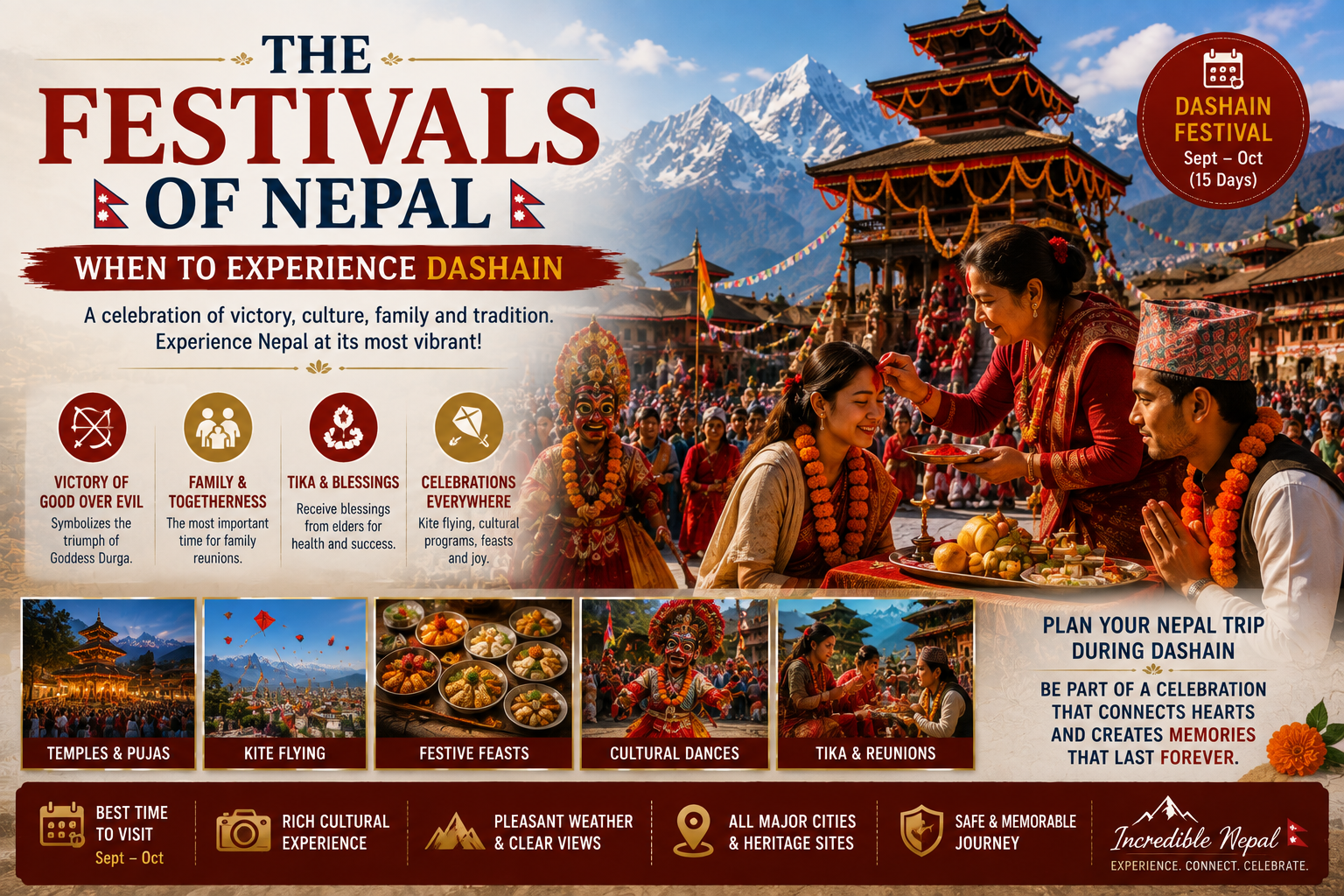
wp_posts
wp_posts lang=”en”>
The Festivals of Nepal: When to Experience Dashain and the Joy of Nepali Culture
Imagine a land where ancient traditions aren’t just remembered but are vibrantly lived, where spirituality weaves through the fabric of daily life, and every season brings a new reason for celebration. Welcome to Nepal! Nestled amidst the majestic Himalayas, this captivating country is a melting pot of diverse cultures, religions, and ethnic groups, each contributing to an extraordinary tapestry of festivities.
Among the myriad of **festivals of Nepal**, one stands out as the grandest, the most eagerly awaited, and the most unifying: Dashain. For two weeks, the nation transforms into a hub of family reunions, blessings, and joyous feasts. If you’re planning a trip to Nepal and wish to immerse yourself in its true cultural spirit, understanding Dashain – and when to experience it – is absolutely essential. But it’s not just about Dashain; it’s about appreciating the heartbeat of a nation expressed through its vibrant annual calendar of events. Let’s embark on a journey through Nepal’s most cherished celebrations.
A Land Alive with Celebrations: Understanding the Festivals of Nepal
Nepal’s calendar is dotted with more than 100 **festivals of Nepal**, each reflecting the country’s rich Hindu and Buddhist heritage, alongside indigenous customs. These celebrations aren’t merely holidays; they are profound expressions of faith, community, and tradition. They serve as a vital link between generations, preserving age-old rituals, art forms, and culinary practices.
From the plains of the Terai to the high Himalayan valleys, every community has its unique way of marking auspicious occasions. These events bring people together, foster a sense of belonging, and offer a spectacular insight into the Nepalese way of life. While many festivals are specific to certain regions or ethnic groups, several are celebrated nationwide with unparalleled enthusiasm. Dashain, without a doubt, leads the pack.
Dashain: The Grandest Celebration of Nepal
What is Dashain? A Deep Dive into Nepal’s Biggest Festival
Dashain, also known as Bada Dashain, is the longest and most auspicious festival in the annual calendar of the **festivals of Nepal**. Spanning 15 days, it commemorates the triumph of good over evil, specifically the victory of the goddess Durga over the demon Mahishasura. This epic mythological battle symbolizes the ultimate victory of righteousness and divine power over malevolent forces. Dashain is not just a religious observance; it’s a powerful cultural phenomenon deeply ingrained in the Nepali psyche.
The festival is a time for family reunions, where relatives travel long distances to be together. It’s an occasion for receiving blessings from elders, feasting on traditional foods, flying kites, playing cards, and enjoying giant bamboo swings (ping and rok chine) erected in villages and towns across the country. The festive atmosphere is palpable, with homes meticulously cleaned, new clothes purchased, and a sense of optimism permeating the air.
While the dates for Dashain vary each year as it follows the lunar calendar (Bikram Sambat), it typically falls in **late September or October**. For 2026, Dashain is expected to largely fall within **October 2026** (specific dates would require consulting a Nepali calendar closer to the time, but generally early-mid October is a good estimation for planning). This timing often coincides with the post-monsoon season, when the skies are clear, the air is crisp, and the landscapes are at their most vibrant – making it an ideal time for both celebration and travel.
The 15 Days of Dashain: Key Rituals and Traditions
Each day of Dashain carries its own significance, rituals, and traditions:
- Ghatasthapana (Day 1): This marks the official beginning of Dashain. A ‘Kalash’ (sacred pot) is filled with holy water, often placed in a secluded room, and barley seeds are sown in sand. This pot symbolizes Goddess Durga, and the growing barley sprouts (Jamara) are central to the festival.
- Fulpati (Day 7): ‘Fulpati’ literally means ‘flowers and leaves’. On this day, a grand procession carrying a ‘Kalash’ of holy water, banana stalks, and other sacred items is brought from Gorkha (the ancestral home of Nepal’s royal family) to Kathmandu’s Hanuman Dhoka palace. While no longer a royal ceremony in the same vein, the tradition continues with governmental and community participation, symbolizing the arrival of the goddess.
- Maha Ashtami (Day 8): This is a day of intense worship of Goddess Durga. Animal sacrifices are common, particularly buffalo, goats, and chickens, offered to appease the goddess and symbolize the vanquishing of evil. The meat from these sacrifices, called ‘Prasad’, is considered sacred. The ‘Kal Ratri’ (Dark Night) ritual is performed at midnight, invoking the fierce manifestation of the goddess.
- Maha Navami (Day 9): The penultimate day continues the worship of Durga. Vishwakarma Puja is also observed, where tools, vehicles, and machinery are worshipped to prevent accidents and ensure prosperity, often with small animal sacrifices. Temples remain crowded with devotees.
- Vijayadashami (Day 10): The most important day of Dashain! This is the day of victory. Elders apply a mixture of rice, yogurt, and vermilion powder (Tika) on the foreheads of younger family members, along with sacred barley sprouts (Jamara) grown from Ghatasthapana. This is accompanied by blessings for health, prosperity, and longevity, and considerable Dakshina (money gifts). Family feasts and gatherings dominate the day.
- Subsequent Days (Days 11-15): For the remaining five days, people continue to visit relatives and friends to receive Tika and blessings, extending the joyful atmosphere.
Why Experience Dashain? More Than Just a Festival
To witness Dashain is to witness the soul of Nepal. It offers an unparalleled opportunity for cultural immersion:
- Family Warmth: You’ll observe firsthand the strong family bonds that are central to Nepali society, as families unite from all corners of the country and beyond.
- Vibrant Atmosphere: The entire nation buzzes with energy. Homes are freshly painted and decorated, markets are bustling with shoppers, and the air is filled with the aroma of festive foods and the sounds of traditional music.
- Traditional Practices: From the elaborate Tika ceremonies to the communal feasts, you get a front-row seat to ancient rituals that have been preserved for centuries.
- Delicious Food: Dashain is a culinary delight! Expect to feast on special dishes like ‘Sel Roti’ (a ring-shaped bread), various meat curries, and an array of sweets.
- Unique Activities: Engage in kite flying, witness traditional dances, and if you’re brave enough, take a swing on one of the towering bamboo ‘ping’ swings that symbolize the joy and freedom of the festival.
Other Major Festivals of Nepal Worth Experiencing
While Dashain is paramount, the calendar of **festivals of Nepal** is rich with other incredible celebrations that offer diverse cultural experiences.
Tihar (Deepawali): The Festival of Lights and Brothers
Following closely after Dashain, Tihar, also known as Deepawali, is a five-day festival celebrated in October or November. It’s a festival of lights, reverence for animals, and sibling bonds. Each day has a unique focus:
- Day 1 (Kaag Tihar): Crows are worshipped and offered food for their role as messengers.
- Day 2 (Kukur Tihar): Dogs are worshipped, garlanded, and given special treats for their loyalty.
- Day 3 (Gai Tihar & Laxmi Puja): Cows are honored in the morning, and in the evening, Goddess Laxmi (goddess of wealth) is worshipped with elaborate pujas, oil lamps, and candles illuminating every home.
- Day 4 (Govardhan Puja/Mha Puja): Different communities celebrate this day differently. Newars observe ‘Mha Puja’, worshipping their own bodies for inner peace. Others perform ‘Govardhan Puja’ (worshipping oxen or a dung mound).
- Day 5 (Bhai Tika): Sisters put a colorful ‘Saptarangi Tika’ on their brothers’ foreheads, praying for their long life and prosperity, cementing the bond of sibling love.
Holi: The Festival of Colors
Celebrated in February or March, Holi is perhaps the most exuberant and joyful of all **festivals of Nepal**. It marks the arrival of spring and the triumph of good over evil (symbolized by the burning of the demoness Holika). People take to the streets, splashing each other with vibrant colored powders and water. It’s a day of uninhibited fun, laughter, music, and delicious food, transcending social barriers. Kathmandu’s Durbar Square becomes a hub of activity.
Indrajatra: Kathmandu’s Living Goddess and Chariots
Primarily celebrated in the Kathmandu Valley, Indrajatra is an eight-day festival held in September, often overlapping with the preparations for Dashain. It honors Indra, the God of Rain and King of Heaven. The highlight is the procession of chariots carrying the Living Goddess Kumari (a pre-pubescent girl revered as a deity), along with Ganesh and Bhairav. Masked dances (Lakhey) and various traditional performances fill the ancient city squares, especially Kathmandu Durbar Square.
Buddha Jayanti: Celebrating the Birth of Siddhartha Gautama
Nepal is the birthplace of Lord Buddha, and Buddha Jayanti, celebrated on the full moon day of May, is a significant event, particularly for the country’s Buddhist population. Pilgrims from around the world flock to Lumbini, Buddha’s birthplace, as well as to Swayambhunath (Monkey Temple) and Boudhanath Stupa in Kathmandu. The festival is marked by prayers, ceremonial processions, chanting, and offerings, creating an atmosphere of deep reverence and peace.
Teej: The Women’s Festival
Teej is a three-day festival predominantly celebrated by Hindu women in Nepal, typically in August or September. It is dedicated to Goddess Parvati, commemorating her devotion to Lord Shiva. Women dress in vibrant red saris, fast for the well-being of their husbands (or for a good husband), and engage in joyous singing and dancing. It’s a powerful expression of sisterhood, faith, and cultural pride, with the Pashupatinath Temple becoming a focal point of celebration.
Planning Your Trip: When to Visit Nepal for its Festivals
To truly experience the **festivals of Nepal**, timing is everything:
- For Dashain: Aim for late September to mid-October. The clear post-monsoon weather adds to the allure, making it perfect for both cultural immersion and trekking. However, be aware that transportation can be very crowded as people travel home, and many businesses might be closed for a few days during Vijayadashami.
- For Tihar: Plan for late October or November, directly after Dashain. This period offers pleasant weather and another layer of unique Nepali celebration.
- For Holi: Visit in February or March to participate in the colorful revelry.
- For Indrajatra: Early to mid-September is ideal if you wish to witness this unique Kathmandu Valley festival.
- For Buddha Jayanti: May offers a serene and spiritual experience, though it marks the approach of the monsoon season.
- For Teej: August or early September is the time to witness this vibrant women’s festival.
General Tips for Festival Travel:
- Book in Advance: Accommodation and domestic flights fill up quickly, especially during Dashain.
- Be Respectful: Always ask permission before taking photos, especially during religious ceremonies. Dress modestly when visiting temples.
- Embrace the Crowds: Festivals can be busy, but the energy is part of the experience.
- Learn Basic Phrases: A few Nepali greetings (Namaste, Dhanyabad) go a long way in connecting with locals.
- Check Specific Dates: Since most Nepali festivals follow the lunar calendar, their exact Gregorian dates shift annually. Always check the current year’s calendar closer to your travel dates.
Frequently Asked Questions about Festivals of Nepal
Dashain is widely considered the biggest and most important festival in Nepal, celebrated nationwide with immense enthusiasm.
Dashain typically falls in late September or October, based on the lunar calendar (Bikram Sambat).
Absolutely! While some rituals are very personal, locals are generally very welcoming and happy for foreigners to observe, and sometimes even participate in, the public aspects of their festivals. Always do so respectfully and ask if unsure.
During the main days of Dashain (especially Vijayadashami), many shops, businesses, and even some restaurants will be closed as people travel to their ancestral homes and spend time with family. It’s advisable to stock up on essentials beforehand.
During Dashain, families enjoy elaborate feasts. Signature dishes include ‘Sel Roti’ (a crispy, sweet, ring-shaped bread), various meat curries (especially goat meat), ‘Achar’ (pickles), and a wide array of homemade sweets.
Yes, it is generally safe. However, public transport can be very crowded, and certain areas, especially temple vicinities, can be extremely busy. Exercise normal caution, be aware of your surroundings, and secure your belongings.
Nepal is a land where every season brings a reason to celebrate, and its **festivals of Nepal** are a testament to its vibrant cultural heartbeat. While Dashain reigns supreme as the grandest and most unifying celebration, the country offers a rich tapestry of other festivals that promise unique insights into its traditions, beliefs, and community spirit.
Experiencing Dashain, with its emphasis on family, blessings, and the triumph of good, is an unforgettable journey into the heart of Nepali culture. But whether you choose the vibrant colors of Holi, the serene prayers of Buddha Jayanti, or the familial warmth of Tihar, a festival visit to Nepal is more than just a trip—it’s an immersion. It’s an opportunity to connect with a people deeply proud of their heritage, to witness ancient rituals, and to create memories that will last a lifetime. So, pack your bags, align your calendar, and prepare to be enchanted by the unparalleled joy of Nepal’s festive spirit!
References
- Nepal Tourism Board (NTB) – Official tourism promotion body of Nepal.
- Lonely Planet Nepal – A trusted source for travel guides and cultural insights.
- UNESCO Intangible Cultural Heritage – Nepal – For cultural and traditional context of Nepali festivals.
- Britannica – Nepal: Cultural Life – Provides general information on the cultural aspects of Nepal.