“`html
Unveiling Nepal’s Best Kept Secrets: Top 10 Hidden Gems in Nepal for Off-the-Beaten-Path Explorers
When you think of Nepal, images of towering Everest peaks, bustling Kathmandu squares, and the serene Annapurna trails often spring to mind. And while these iconic destinations are undeniably magnificent, they represent just a fraction of what this diverse Himalayan nation has to offer. Beyond the well-trodden paths lies a world of undiscovered beauty, ancient cultures, and pristine wilderness waiting to be explored.
For the adventurous soul seeking authentic experiences and a profound connection with nature and local life, Nepal holds a treasure trove of secrets. These aren’t just obscure locations; they are the true hidden gems in Nepal, offering unparalleled opportunities for solitude, cultural immersion, and breathtaking vistas away from the tourist crowds. If you’re ready to peel back the layers and explore the road less traveled, join us as we embark on a journey to unveil Nepal’s most captivating, off-the-beaten-path wonders.
Why Venture Off-the-Beaten-Path in Nepal?
Choosing to explore the lesser-known corners of Nepal is a decision rewarded manifold. It’s about more than just avoiding crowds; it’s about experiencing the raw, unfiltered essence of a country. Here’s why these hidden gems in Nepal are worth the extra effort:
- Authentic Cultural Immersion: Engage directly with local communities whose traditions and lifestyles remain largely untouched by mass tourism.
- Pristine Nature: Discover untouched landscapes, from lush forests and remote lakes to high-altitude deserts and spiritual meadows.
- Peace and Serenity: Find solace in tranquil environments, where the sounds of nature replace urban clamor, allowing for deep introspection and relaxation.
- Unique Adventures: Embark on treks and explorations that challenge and reward in ways mainstream routes cannot, offering a true sense of discovery.
- Support Local Economies: Your visit directly benefits remote communities, fostering sustainable tourism development in areas that need it most.
Our Top 10 Hidden Gems in Nepal (Off-the-Beaten-Path)
1. Rara Lake (Mugu District)
Nestled in the remote far-western region of Nepal, Rara Lake is the country’s largest and deepest freshwater lake, often referred to as the “Queen of Lakes.” Surrounded by Rara National Park, its shimmering turquoise waters reflect the snow-capped peaks of the Himalayas, creating a mesmerizing spectacle that changes color several times a day. The journey to Rara is an adventure in itself, involving scenic flights, thrilling jeep rides, and often a short trek. This pristine natural wonder is a sanctuary for diverse flora and fauna, including the elusive red panda and musk deer.
- What to do: Boating on the lake, hiking around its circumference, birdwatching, exploring the surrounding national park, camping under a canopy of stars.
- Best time to visit: September to October (post-monsoon) and April to May (pre-monsoon) for clear skies and pleasant weather.
2. Tsum Valley (Manaslu Region)
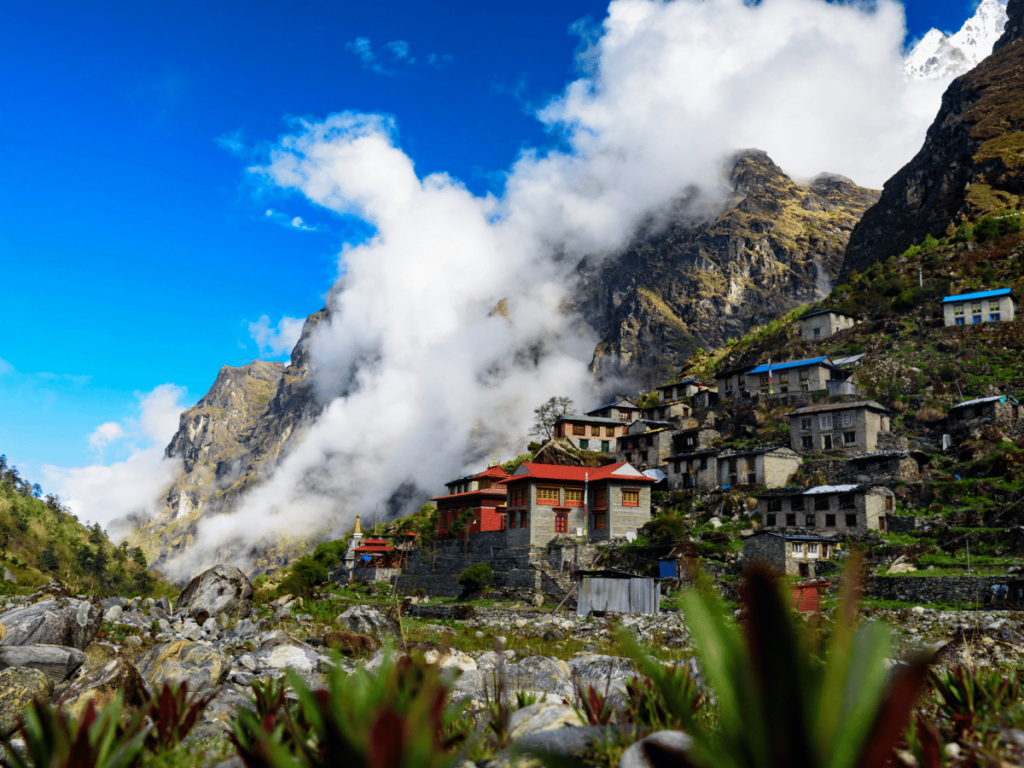
Hidden deep within the Manaslu region, the Tsum Valley is a sacred Himalayan pilgrimage valley with a rich ancient Buddhist culture. “Tsum” means vivid, and indeed, the valley bursts with vibrant traditions, ancient monasteries, chortens, and prayer flags. Opened to trekkers only in 2008, it still feels like stepping back in time. The indigenous Tsumbas, descendants of Tibetan migrants, practice a unique form of Buddhism and a traditional way of life, untouched by modern influences. The landscape is a dramatic blend of terraced fields, dense forests, and towering peaks like Ganesh Himal.
- What to do: Trekking through picturesque villages, visiting historic monasteries like Rachen Gompa and Mu Gompa, observing traditional Tsumba life, experiencing authentic hospitality.
- Permit: Special Restricted Area Permit is required, in addition to Manaslu Conservation Area Permit (MCAP) and Annapurna Conservation Area Project (ACAP) permits.
3. Limi Valley (Humla District)
In the extreme northwest of Nepal, bordering Tibet, lies the remote and almost mythical Limi Valley. This truly off-the-beaten-path destination offers an extraordinary journey into an ancient Tibetan Buddhist culture preserved in its purest form. Accessible only by foot or a strenuous jeep track for a portion of the route, the Limi Valley trek passes through stark, beautiful landscapes, traditional stone villages, and provides stunning views of Saipal and Api Himal. It’s a land where time seems to stand still, offering unparalleled solitude and a profound connection to the Himalayan wilderness.
- What to do: Trekking through remote villages (Halji, Til, Jang), exploring ancient monasteries (e.g., Rinchenling Gompa), observing nomadic life, marveling at untouched mountain scenery.
- Permit: Special Restricted Area Permit is mandatory.
4. Phoksundo Lake (Shey Phoksundo National Park, Dolpo Region)
The deepest lake in Nepal, Phoksundo Lake is a breathtaking turquoise jewel nestled within the barren landscapes of Shey Phoksundo National Park in the Dolpo region. This mesmerizing lake, with its peculiar ‘Y’ shape and absence of aquatic life (attributed to its extreme cold and mineral content), is surrounded by towering cliffs and forests. The entire Dolpo region is famous for its unique Bön-Buddhism culture, rugged terrains, and stunning Himalayan panoramas. The trek to Phoksundo Lake is an unforgettable journey through challenging yet incredibly rewarding landscapes, offering glimpses into a truly isolated Himalayan lifestyle.
- What to do: Trekking to and around the lake, visiting Ringmo village and its ancient monastery, exploring the national park known for snow leopards, yak caravans.
- Permit: Shey Phoksundo National Park entry fee and often a Special Restricted Area Permit for Lower Dolpo.
5. Khaptad National Park (Far-Western Nepal)
Khaptad National Park is a spiritual and ecological wonderland situated in the mid-mountain region of far-western Nepal. It’s named after Khaptad Baba, a revered ascetic who meditated here for many years. The park is characterized by its rolling hills of grasslands (locally known as “patans”), dense oak and rhododendron forests, and numerous small lakes and streams. It’s a biodiversity hotspot, home to over 224 species of medicinal herbs, diverse birds, and animals like musk deer and barking deer. Its tranquil atmosphere and spiritual significance make it a perfect retreat for those seeking peace and nature.
- What to do: Exploring the spiritual Khaptad Ashram, trekking through the meadows, birdwatching, meditating in serene natural surroundings.
- Accessibility: Requires a trek from easily accessible road heads like Silgadhi or Jhigrana.
6. Pikey Peak (Solukhumbu District)
While Everest Base Camp draws the crowds, Pikey Peak offers one of the most magnificent panoramic views of the Everest range and other mighty Himalayas without the extreme altitude and difficulty. Located in the lower Solukhumbu region, this trek is gaining popularity but still remains a quiet alternative for those wanting an Everest view experience. From the summit of Pikey Peak (4,065m), one can witness a breathtaking sunrise and sunset over Mount Everest, Kanchenjunga, Makalu, Lhotse, Ama Dablam, and more. The trail passes through charming Sherpa villages, lush rhododendron forests, and offers insights into local Buddhist culture.
- What to do: Sunrise/sunset views from Pikey Peak, exploring traditional Sherpa villages, visiting ancient monasteries, enjoying local cuisine and hospitality.
- Best time to visit: March-May and September-November.
7. Bardiya National Park (Terai Region)
For wildlife enthusiasts, Bardiya National Park in the western Terai lowlands is arguably Nepal’s best-kept secret for incredible safari experiences. Often overshadowed by Chitwan, Bardiya offers a wilder, less crowded, and more authentic jungle adventure with a higher chance of spotting the majestic Royal Bengal Tiger. The park boasts diverse ecosystems, including grasslands, savannah, and riverine forests, providing habitat for one-horned rhinos, elephants, leopards, deer species, and over 400 species of birds. It’s an ecotourism paradise focusing on sustainable and responsible tourism.
- What to do: Jungle safari (jeep, walking, elephant back), birdwatching, rafting/canoeing on the Karnali River, Tharu cultural programs, cycling through buffer zones.
- Conservation: Known for its successful tiger conservation efforts.
8. Ilam (Eastern Nepal)
Known as the “Queen of Hills” or the “Tea Garden of Nepal,” Ilam is a picturesque district in eastern Nepal famous for its sprawling tea estates, lush green hills, and cool climate. While relatively well-known regionally, it remains a serene escape for international tourists looking for a tranquil retreat amidst nature. The terraced tea gardens, mist-shrouded landscapes, and traditional Nepali villages create a postcard-perfect setting. Ilam is also a cultural melting pot, with diverse ethnic groups like Rai, Limbu, Lepcha, and Newar coexisting harmoniously.
- What to do: Visiting tea factories and estates (e.g., Kanyam, Fikkal), hiking through the hills, experiencing local village life, birdwatching, enjoying panoramic viewpoints like Antu Danda for sunrise/sunset.
- Local products: Famous for its orthodox tea, milk, potato, and broom grass.
9. Panauti (Kavrepalanchok District)
Just a short drive from Kathmandu, Panauti is a charming and historically significant Newari town that often gets overlooked in favor of more famous UNESCO sites. It’s a living museum, featuring ancient temples, traditional houses, and intricate wood carvings that date back centuries. Panauti is nestled at the confluence of two rivers, Punyamati and Roshi, and is considered a sacred place by Hindus and Buddhists alike. Every 12 years, it hosts the grand ‘Makar Mela’ festival, drawing devotees from across Nepal and India. Its tranquil atmosphere and rich heritage make it one of the most accessible yet profound hidden gems in Nepal.
- What to do: Exploring the Indreshwar Temple complex (one of Nepal’s oldest), wandering through the narrow alleys, observing traditional Newari architecture, visiting local pottery workshops.
- Proximity: An easy day trip or overnight stay from Kathmandu.
10. Gorkha (Gorkha District)
The historical heartland of modern Nepal, Gorkha is a fascinating destination that often gets missed by tourists hurrying to Pokhara or the Annapurna region. It’s the ancestral home of the Shah dynasty, who unified Nepal, and the birthplace of Prithvi Narayan Shah, the great unifier. Perched on a hilltop, the impressive Gorkha Durbar (palace) offers commanding views of the surrounding valleys and the Ganesh Himal range. The town itself is a vibrant mix of historical sites, local markets, and traditional Nepalese life. Visiting Gorkha provides a deep dive into Nepal’s rich history and offers a refreshing break from typical tourist trails.
- What to do: Visiting Gorkha Durbar and the nearby Kalika Temple, exploring the Gorkha Museum, trekking to Manakamana Temple (via cable car), enjoying panoramic mountain views.
- Significance: A crucial site for understanding Nepal’s unification history.
Tips for Exploring Off-the-Beaten-Path in Nepal
Venturing into these hidden gems in Nepal requires a bit more preparation and a mindful approach. Here are some essential tips:
- Go with a Reputable Local Guide/Agency: Especially for restricted areas or remote treks, a local guide is invaluable for permits, navigation, cultural insights, and safety.
- Pack Smart: Be prepared for varied weather conditions. Essentials include sturdy trekking shoes, layers of clothing, a first-aid kit, water purification tablets, and a power bank.
- Respect Local Culture and Environment: Dress modestly, ask for permission before taking photos, and always practice Leave No Trace principles. Support local businesses by buying local products.
- Be Flexible: Infrastructure in remote areas can be basic. Embrace the unexpected, be patient, and enjoy the journey rather than just the destination.
- Travel Insurance: Comprehensive travel insurance covering high-altitude trekking and emergency evacuation is highly recommended.
- Learn Basic Nepali Phrases: A few simple phrases like “Namaste” (hello), “Dhanyabad” (thank you), and “Kasto chha?” (how are you?) can go a long way in connecting with locals.
Frequently Asked Questions about Hidden Gems in Nepal
Q1: What is the best time to visit these hidden gems in Nepal?
A: Generally, the spring (March-May) and autumn (September-November) seasons are ideal. These periods offer stable weather, clear skies, and comfortable temperatures for trekking and exploration. However, some areas like Bardiya National Park might be better in the cooler winter months for wildlife viewing.
Q2: Are these off-the-beaten-path destinations safe for solo travelers?
A: Nepal is generally considered safe for travelers. However, for remote and off-the-beaten-path destinations, it’s highly recommended for solo travelers to hire a local guide or porter. This not only enhances safety but also provides invaluable cultural insights and supports the local economy. Always inform someone of your itinerary.
Q3: Do I need special permits to visit some of these areas?
A: Yes, for many truly remote areas like Tsum Valley, Limi Valley, and parts of Dolpo (Phoksundo Lake), special restricted area permits are mandatory. These permits typically require a registered trekking agency and a minimum of two trekkers (though some may allow solo permits with an agency). National park entry permits are also required for places like Rara and Khaptad National Parks.
Q4: How do I access these remote locations?
A: Access often involves a combination of domestic flights, jeep rides on rough roads, and multi-day treks. Some places like Panauti and Gorkha are relatively accessible by bus or private vehicle from Kathmandu. For others, a combination of transport modes adds to the adventure.
Q5: What kind of accommodation can I expect in these hidden gems?
A: Accommodation in these areas ranges from basic teahouses and homestays on trekking routes to comfortable lodges in more accessible spots like Bardiya or Ilam. Expect simple facilities, often without attached bathrooms or hot showers, but always accompanied by warm local hospitality. Camping might also be an option for some deep wilderness treks.
Conclusion: Unveiling Nepal’s Authentic Charm
Nepal is a land of endless discovery, a country where every valley tells a story and every peak holds a secret. While the iconic trails offer unparalleled beauty, it is in its hidden gems in Nepal that you truly find the nation’s authentic heart and soul. These off-the-beaten-path destinations promise not just stunning landscapes but profound cultural encounters, spiritual solace, and adventures that will etch themselves into your memory.
So, if your wanderlust yearns for something beyond the ordinary, if you dream of forging your own path and experiencing Nepal in its purest form, consider these lesser-known treasures. Pack your bags, open your mind, and prepare to be enchanted by the untouched beauty and genuine warmth of Nepal’s best-kept secrets. Your extraordinary adventure awaits!
References
“`