7 Days in Kathmandu: A Perfect Cultural Itinerary
Published March 2, 2026 by Archana Pandey
Blogs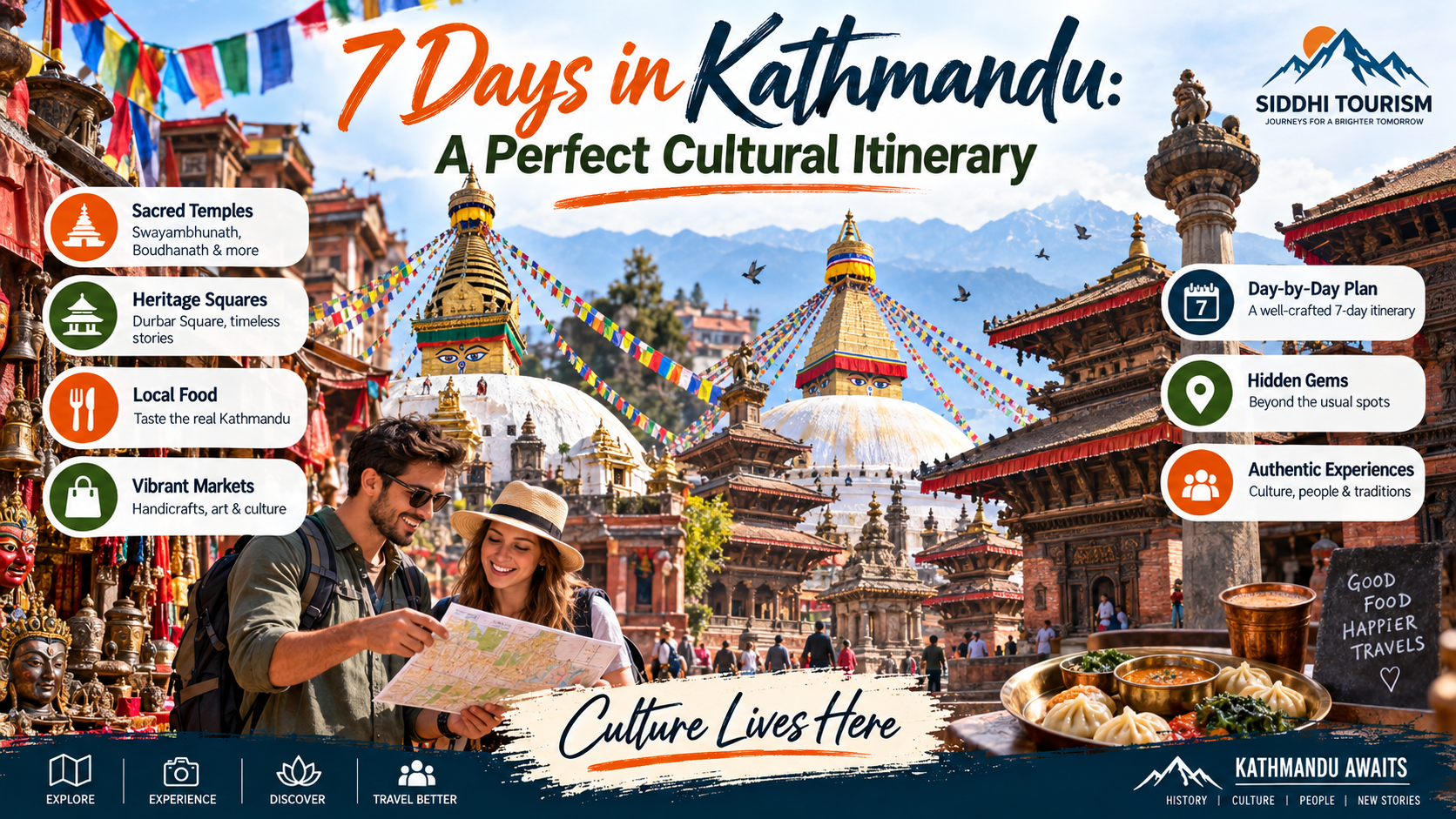
7 Days in Kathmandu: A Perfect Cultural Itinerary
This isn’t just another travel plan; it’s a meticulously crafted itinerary designed to help you navigate the city’s countless wonders, ensuring you experience the true essence of Nepali heritage. From bustling markets to serene stupas, and ancient palaces to spiritual sanctuaries, prepare to be captivated. If you’re wondering how to maximize your Kathmandu sightseeing and truly understand the soul of this incredible destination, look no further. Join us as we unveil a perfect 7-day cultural itinerary that will leave you with memories to cherish for a lifetime.
Your 7-Day Cultural Kathmandu Sightseeing Adventure
Day 1: Arrival and Thamel Immersion
Upon your arrival at Tribhuvan International Airport (TIA), you’ll be greeted by the captivating energy of Kathmandu. After checking into your hotel, preferably in the lively tourist hub of Thamel, it’s time to shake off the travel dust and begin your exploration. Thamel is a fascinating maze of narrow streets, bustling with shops selling everything from trekking gear to traditional crafts, vibrant cafes, and restaurants offering local and international cuisine. It’s the perfect place for a gentle introduction to the city’s rhythm.
- Afternoon: Stroll through the labyrinthine alleys of Thamel. Observe the daily life, haggle for souvenirs, and soak in the atmosphere.
- Evening: Enjoy a traditional Nepali dinner with live music or a cultural show, a delightful way to ease into your cultural immersion. Try some local delicacies like momos or dal bhat.
Day 2: Kathmandu Durbar Square & Swayambhunath (Monkey Temple)
Day two plunges you deep into Kathmandu’s historical heart, beginning with two iconic UNESCO World Heritage Sites, epitomizing the city’s diverse spiritual landscape.
- Morning: Kathmandu Durbar Square
Start your Kathmandu sightseeing at the historic Durbar Square. This ancient royal palace complex is a stunning showcase of Newar architecture, adorned with intricately carved wooden temples, palaces, and courtyards. Explore the Hanuman Dhoka Palace complex, visit the Kumari Ghar (House of the Living Goddess), and marvel at the numerous temples like Taleju Temple and Jagannath Temple. The square vibrates with history, telling tales of kings and ancient rituals. UNESCO World Heritage Centre highlights its artistic and architectural achievements. - Afternoon: Swayambhunath Stupa (Monkey Temple)
Perched atop a hill, Swayambhunath offers panoramic views of the Kathmandu Valley. This ancient stupa, one of the oldest and most sacred sites in the valley, is a significant Buddhist pilgrimage site. Its gleaming white dome and golden spire, adorned with the Buddha’s all-seeing eyes, are iconic. Be prepared to share the steps with the resident mischievous monkeys! The serene atmosphere, prayer flags fluttering in the wind, and the spiritual energy make it a truly captivating experience.
Day 3: Pashupatinath & Boudhanath Stupa
Today is dedicated to exploring the spiritual heart of Kathmandu, encompassing both Hindu and Buddhist traditions.
- Morning: Pashupatinath Temple
A sacred Hindu temple complex on the banks of the Bagmati River, Pashupatinath is one of the most significant Shiva temples in the world. While non-Hindus are not permitted inside the main temple, you can observe the fascinating rituals, sadhus (holy men), and the solemn Hindu cremation ceremonies along the riverbanks from across the ghats. It’s a powerful and humbling experience, offering profound insights into Hindu beliefs surrounding life and death. UNESCO recognizes its outstanding universal value. - Afternoon: Boudhanath Stupa
Just a short drive from Pashupatinath lies Boudhanath, one of the largest stupas in Nepal and a focal point of Tibetan Buddhism. Its colossal mandala makes it one of the largest spherical stupas in the world. Join pilgrims performing kora (circumambulation) around the stupa, spinning prayer wheels, and soaking in the tranquil yet vibrant atmosphere. The area around Boudhanath is dotted with monasteries, vibrant thangka painting shops, and eateries serving delicious Tibetan food, making it an excellent spot for further cultural exploration and contemplation.
Day 4: Patan Durbar Square & Jawalakhel Handicraft Center
Venture out of Kathmandu city into the equally enchanting city of Patan, renowned as the ‘City of Fine Arts’.
- Morning: Patan Durbar Square
Patan Durbar Square, another glorious UNESCO World Heritage Site, is a spectacular display of Newar architecture. It boasts more concentrated ancient temples, royal palaces, and courtyards than even Kathmandu Durbar Square. Highlights include the Krishna Mandir, with its 21 golden pinnacles, the Patan Museum (located within the palace), and the Golden Temple (Hiranya Varna Mahavihar). The craftsmanship evident in the carvings and statues is simply breathtaking. - Afternoon: Jawalakhel Handicraft Center & Local Crafts
After immersing yourself in Patan’s history, explore its artistic side further. Visit the Jawalakhel Handicraft Center, a Tibetan Refugee Camp known for its intricate carpet weaving. It’s an opportunity to see artisans at work and purchase high-quality, handcrafted goods directly, supporting local communities. You can also explore the smaller workshops and galleries scattered around Patan, specializing in metalwork, statuary, and thankga paintings.
Day 5: Bhaktapur Durbar Square & Changu Narayan Temple
Today, your Kathmandu sightseeing journey takes you to the medieval city of Bhaktapur, followed by the oldest temple in the valley.
- Morning: Bhaktapur Durbar Square
Step back in time at Bhaktapur Durbar Square, often considered the best preserved of the three Durbar Squares in the Kathmandu Valley. Known as the ‘City of Devotees’, Bhaktapur offers a more rustic and authentic feel. Marvel at the 55-Window Palace, the Golden Gate, and the Nyatapola Temple – Nepal’s tallest pagoda temple. Don’t miss Pottery Square, where you can witness potters creating their wares using age-old techniques. Bhaktapur’s charm lies in its untouched medieval ambiance. - Afternoon: Changu Narayan Temple
A short drive from Bhaktapur leads you to Changu Narayan, the oldest temple in Nepal, dedicated to Lord Vishnu. This UNESCO World Heritage Site dates back to the 4th century and is famous for its exquisite stone carvings and sculptures, offering a glimpse into early Nepali art and architecture. Perched on a hilltop, it also provides serene views of the surrounding countryside. This often-overlooked gem is a peaceful retreat and a vital piece of Nepal’s cultural puzzle.
Day 6: Nagarkot Sunrise & Farewell Cultural Evening
Experience the majestic Himalayas and reflect on your cultural journey.
- Morning: Nagarkot Sunrise View
Wake up before dawn for an unforgettable drive to Nagarkot, a hill station renowned for its spectacular sunrise views over the Himalayas. On a clear day, you can witness a breathtaking panorama spanning from Dhaulagiri in the west to Mount Everest in the east. It’s a truly magical way to appreciate Nepal’s natural beauty after days of urban exploration. - Late Morning/Afternoon: Return to Kathmandu & Leisure
After enjoying the sunrise, return to Kathmandu. You can spend the afternoon at leisure – perhaps revisiting a favorite spot, doing some last-minute souvenir shopping at Ason Market for a local experience, or unwinding at the tranquil Garden of Dreams. - Evening: Authentic Nepali Cultural Dinner
Conclude your cultural odyssey with a grand farewell dinner at a traditional Nepali restaurant. Enjoy delicious local cuisine accompanied by mesmerizing folk music and dance performances, a perfect culmination of your deep dive into Nepali culture.
Day 7: Departure
After a week of incredible Kathmandu sightseeing and cultural immersion, it’s time to say goodbye to this enchanting city. Enjoy a final Nepali breakfast, perhaps pick up a few last-minute gifts, and head to Tribhuvan International Airport for your departure, carrying with you memories of ancient wonders, vibrant traditions, and the warm hospitality of Nepal.
Frequently Asked Questions About Kathmandu Sightseeing
When is the best time to visit Kathmandu?
The best time to visit Kathmandu is during the autumn (September to November) and spring (March to May). These seasons offer clear skies, pleasant temperatures, and excellent visibility for mountain views. The monsoon season (June to August) brings heavy rains, and winter (December to February) can be quite cold, especially in the mornings and evenings.
Is Kathmandu safe for tourists?
Kathmandu is generally safe for tourists. As with any major city, it’s wise to be aware of your surroundings, especially at night, and take standard precautions like safeguarding your valuables. Petty crime can occur, but serious incidents are rare. The locals are usually very welcoming and helpful.
How do I get around Kathmandu?
For short distances, you can walk, especially in areas like Thamel. For longer distances, taxis are readily available; always negotiate the fare beforehand or use ride-sharing apps like Pathao or InDriver. Local buses are cheap but can be crowded and confusing for first-timers. Rickshaws offer a unique, if slower, experience in certain areas.
Do I need a visa for Nepal?
Most foreign nationals require a visa to enter Nepal. Visas can be obtained on arrival at Tribhuvan International Airport or from Nepalese embassies/consulates abroad. It’s advisable to check the latest visa requirements for your nationality before your trip.
What currency is used in Nepal?
The local currency is the Nepalese Rupee (NPR). While credit cards are accepted in many hotels and larger shops, it’s always good to carry some cash for smaller purchases, local markets, and entrance fees to some sites. ATMs are widely available.
What should I pack for a cultural trip to Kathmandu?
Pack comfortable walking shoes, light clothing (modest attire is recommended, especially when visiting religious sites), a light jacket or sweater for cooler evenings, sun protection (hat, sunscreen), and a reusable water bottle. For temple visits, consider bringing a scarf to cover shoulders or knees if needed. A universal adapter and portable power bank are also useful.
Conclusion: Your Unforgettable Kathmandu Journey Awaits
Kathmandu is more than just a destination; it’s an experience that awakens the senses and touches the soul. This 7-day cultural itinerary offers a comprehensive dive into its ancient history, profound spirituality, and vibrant traditions, ensuring that your Kathmandu sightseeing isn’t just a tour, but a true immersion. From the spiritual sanctuaries of Swayambhunath and Boudhanath to the architectural grandeur of the Durbar Squares, and the everyday charm of its bustling streets, every moment in this city is a step deeper into a living heritage.
Allow yourself to be swept away by its magic, to learn from its past, and to connect with its resilient present. With this guide, you’re not just visiting; you’re discovering the heart of Nepal. So, pack your bags, open your mind, and prepare for an unforgettable adventure. Your perfect cultural journey in Kathmandu begins now!
“`