How to Prevent Altitude Sickness While Trekking
Published April 1, 2026 by Archana Pandey
Blogs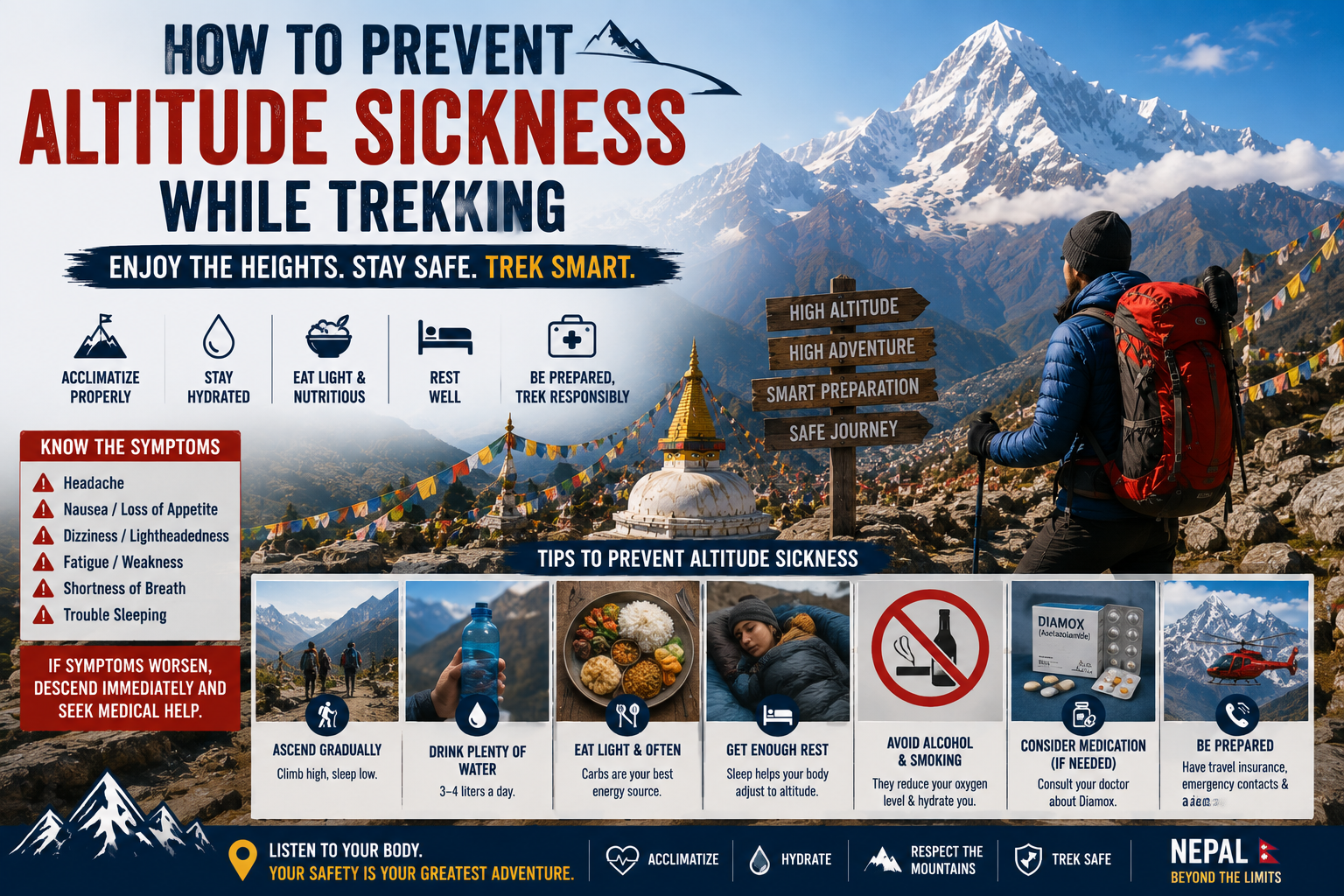
Altitude sickness is one of the most important health concerns for travelers trekking in Nepal’s high mountains. It can affect people regardless of age or fitness when they ascend too quickly. The good news is that gradual acclimatization, sensible pacing and awareness of symptoms can significantly reduce risk.
What Is Altitude Sickness?
Altitude sickness can occur when the body does not adapt quickly enough to reduced oxygen availability at higher elevations. Mild acute mountain sickness may cause headache, fatigue, dizziness, nausea or poor sleep. More serious altitude-related illness can become dangerous and requires immediate descent and medical attention.
1. Ascend Gradually
The most important prevention strategy is allowing your body time to adapt. Avoid gaining altitude too quickly, particularly once you reach higher trekking elevations. Build rest or acclimatization days into longer Himalayan itineraries and follow the advice of experienced guides.
2. Stay Hydrated
Drink fluids regularly, particularly during active trekking. Dehydration can make headaches and fatigue worse. At the same time, avoid forcing excessive amounts of water in a short period. Balance hydration with your activity level and local conditions.
3. Listen to Your Body
Do not ignore symptoms because you want to stay on schedule. A mild headache may be an early warning sign, while worsening headache, vomiting, confusion, severe weakness or breathing difficulty requires urgent attention. Tell your guide or trekking companions about symptoms immediately.
4. Eat Regularly and Rest Well
Trekking at altitude demands energy. Eat regular meals containing carbohydrates, protein and other nutrients, and take adequate rest. Sleep can be difficult at altitude, so a slower itinerary often works better than trying to cover long distances every day.
5. Avoid Alcohol and Smoking
Alcohol can affect hydration, sleep and judgment, while smoking can place additional strain on the respiratory system. Avoiding both is a sensible choice while acclimatizing and trekking at altitude.
6. Use a Sensible Trekking Pace
A slow, steady walking pace is usually more sustainable than repeated bursts of speed. Keep your breathing controlled and take short breaks before exhaustion becomes severe. Your guide can adjust the pace to suit the group.
7. Know When to Descend
If symptoms become worse despite rest, descent is an important safety measure. Do not continue climbing simply because a destination is close. In remote Himalayan environments, early action can prevent a minor problem from becoming an emergency.
Altitude Sickness Warning Signs
- Persistent or worsening headache
- Nausea or vomiting
- Dizziness or unusual fatigue
- Difficulty sleeping
- Confusion or unusual behavior
- Breathing difficulty, especially at rest
- Loss of coordination
Severe symptoms require urgent medical assessment and descent. This article provides general travel information and does not replace professional medical advice.
Preparing Before a Nepal Trek
Choose an itinerary appropriate for your experience, research the maximum elevation, arrange suitable travel insurance and discuss any existing medical concerns with a qualified healthcare professional before the trip. Pack warm layers, water, sun protection, essential medicines and a basic first-aid kit.
Why a Local Trekking Guide Helps
An experienced local guide can monitor the group’s pace, recognize changing conditions and help coordinate accommodation, meals and emergency support. This is especially useful for first-time trekkers who are unfamiliar with Himalayan terrain.
Frequently Asked Questions
Can fit people get altitude sickness?
Yes. Fitness does not guarantee protection because altitude sickness is primarily related to acclimatization and the speed of ascent.
How can I prevent altitude sickness while trekking in Nepal?
Ascend gradually, acclimatize, stay hydrated, eat regularly, avoid alcohol and respond quickly if symptoms worsen.
Should I continue trekking with a headache?
A persistent or worsening headache should not be ignored. Rest, inform your guide and follow professional or local medical advice before gaining more altitude.
Trek Nepal Safely
The Himalayas reward careful preparation. By allowing enough time to acclimatize, maintaining a steady pace and taking symptoms seriously, you can make your Nepal trekking experience safer and more enjoyable.