30-Day Recap: Planning Your Dream Nepal Vacation
Published April 4, 2026 by Archana Pandey
Blogs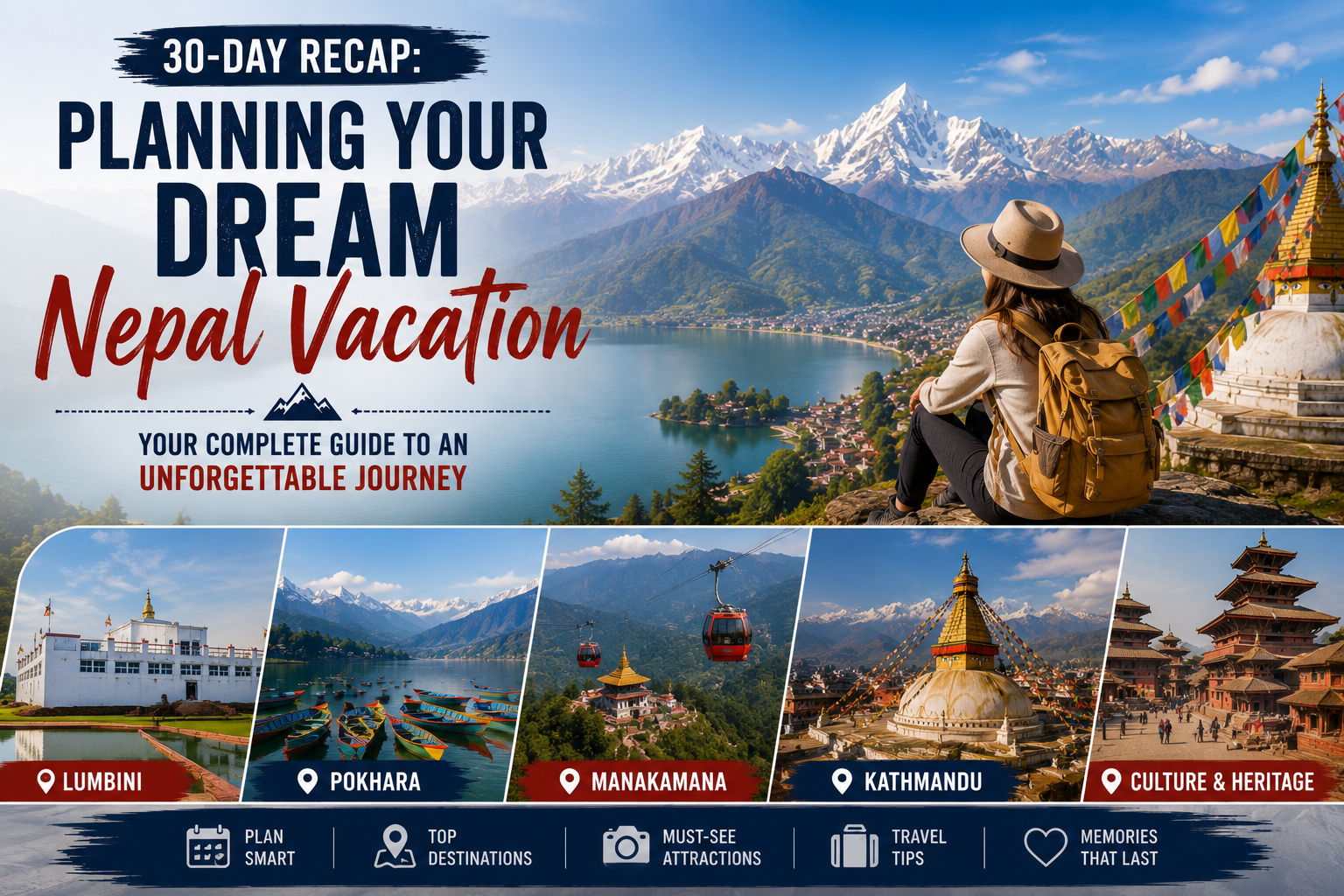
Planning a Nepal holiday can feel overwhelming because the country offers Himalayan landscapes, historic cities, pilgrimage sites, wildlife experiences and adventure activities within a relatively compact destination. This 30-day Nepal vacation planner helps you organize a longer trip without turning the itinerary into a rushed checklist. Instead, you can divide the month between Kathmandu Valley, the Himalayas, Pokhara, Chitwan and quieter cultural destinations.
A 30-day trip also gives you something shorter holidays often lack: flexibility. You can keep rest days between demanding activities, adjust your route when weather changes, and spend more time in places that genuinely interest you. Therefore, use this guide as a planning framework rather than a fixed schedule.
Why Plan a 30-Day Nepal Vacation?
Nepal offers far more than Mount Everest. A well-planned month can combine UNESCO-listed heritage, Buddhist and Hindu pilgrimage sites, mountain trekking, lakeside relaxation, jungle wildlife and local food. Moreover, travelling at a slower pace allows you to understand the culture instead of simply collecting attractions.
- Culture: Explore Kathmandu, Patan and Bhaktapur and discover Newari architecture, temples and traditional courtyards.
- Mountains: Choose a trek that matches your fitness, experience and available time.
- Nature: Enjoy Pokhara’s lakes and mountain scenery, followed by the forests and wildlife of Chitwan.
- Spiritual travel: Visit important Hindu and Buddhist sites, including Pashupatinath, Boudhanath and Lumbini.
- Adventure: Add activities such as rafting, paragliding or bungee jumping when conditions and operators permit.
Suggested 30-Day Nepal Itinerary
Days 1–4: Kathmandu Valley
Begin your Nepal vacation in Kathmandu. Keep the first day relatively light so you can recover from your journey and adjust to the local environment. Over the next few days, explore Kathmandu Durbar Square, Swayambhunath, Boudhanath and Pashupatinath. You can also spend time around Thamel for restaurants, local shops and travel essentials.
Next, dedicate a day to Patan and Bhaktapur. Patan is known for its traditional Newari architecture and artistic heritage, while Bhaktapur offers historic squares, temples and traditional craftsmanship. If you want a quieter Himalayan viewpoint, add an overnight stay around Nagarkot or Dhulikhel.
Days 5–7: Heritage, Markets and Preparation
Use these days to explore destinations that you may have missed during your first Kathmandu visits. A relaxed schedule works particularly well before a trek. Visit local markets, heritage courtyards and religious sites, and leave enough time to organize permits, equipment and transportation.
If mountain visibility is good, sunrise around Nagarkot or Dhulikhel can provide an attractive introduction to the Himalayan landscape. However, views depend on weather and season, so treat them as an opportunity rather than a guarantee.
Days 8–19: Choose Your Himalayan Trek
The middle portion of a 30-day Nepal itinerary can be dedicated to trekking. Your choice should depend on your fitness, previous trekking experience, altitude tolerance and preferred duration. A reputable local trekking operator can help you choose an appropriate route and arrange permits, guides and logistics.
Option 1: Everest Base Camp Trek
The Everest Base Camp route is one of Nepal’s best-known trekking experiences. A typical itinerary includes Lukla, Phakding, Namche Bazaar, Tengboche and Dingboche before reaching Everest Base Camp. Many itineraries also include Kala Patthar for mountain views. Because altitude is a major consideration, acclimatization days are essential and the actual duration varies by route and operator.
Option 2: Annapurna Base Camp Trek
Annapurna Base Camp offers a different Himalayan experience, with routes passing through villages, forests and mountain valleys before reaching the Annapurna Sanctuary. The trek can suit travellers who want a shorter Himalayan adventure while still experiencing dramatic mountain scenery. Route conditions and duration vary by season.
Option 3: Annapurna Circuit
The Annapurna Circuit is suitable for travellers who want a longer and more varied trek. The route passes through changing landscapes and elevations and may include the Thorong La area. Because high-altitude travel requires careful planning, discuss acclimatization, road sections, weather and emergency arrangements with your trekking provider.
Planning tip: Do not fill every day of a long Nepal trip with activities. Rest and acclimatization days make the overall experience safer and more enjoyable.
Days 20–23: Pokhara and Phewa Lake
After your trek, spend several days in Pokhara. The city is known for Phewa Lake, mountain views and a relaxed lakeside atmosphere. Visit Devi’s Fall, Gupteshwar Cave, the World Peace Pagoda and other attractions according to your interests.
You can also choose a Phewa Lake boat ride or an optional adventure activity such as paragliding. Before booking an adventure, confirm the operator, current price, weather conditions and safety requirements.
Pokhara is also a useful place to slow down after a demanding trek. Enjoy local food, walk around Lakeside and keep at least one flexible period for rest.
Days 24–27: Chitwan National Park
Continue to Chitwan for a completely different side of Nepal. The lowland environment contrasts strongly with the Himalayan regions. Depending on the package and season, activities can include a jeep safari, nature walk, canoe experience, birdwatching and Tharu cultural programs.
Wildlife sightings are never guaranteed, but Chitwan is known for its rich biodiversity. Follow park rules, maintain a safe distance from wildlife and use a licensed local operator for activities inside or around the protected area.
Days 28–29: Lumbini or a Flexible Return Day
If your route and travel time allow, consider visiting Lumbini, the birthplace of Gautama Buddha and an important pilgrimage destination. The Maya Devi Temple and monastic zone are among the key attractions. Alternatively, keep these days flexible and return towards Kathmandu if your international departure requires additional buffer time.
Day 30: Kathmandu and Departure
Keep your final day simple. Complete shopping, collect travel documents and allow enough time for airport transfers. If you are travelling overland, leave additional time for traffic and road conditions. A flexible final day reduces stress if earlier transport has been delayed.
Best Time to Visit Nepal
Spring and autumn are popular for trekking and sightseeing because conditions are often favourable. March to May can bring pleasant temperatures and blooming rhododendrons in many mountain regions. September to November often provides clearer mountain views after the monsoon.
Winter can be comfortable in Kathmandu, Pokhara and Chitwan, although higher trekking areas can become very cold. The monsoon months bring more rainfall and can affect road travel, flights and mountain visibility. Nevertheless, some lower-altitude destinations remain attractive during this period.
How Much Does a 30-Day Nepal Trip Cost?
The total cost depends heavily on your travel style and activities. Accommodation, domestic flights, trekking permits, guides, transportation, meals, insurance and optional experiences can change the budget significantly.
- Budget travel: Choose guesthouses, local restaurants and public or shared transport where practical.
- Mid-range travel: Combine comfortable hotels with private transfers and selected guided activities.
- Premium travel: Choose higher-category hotels, private vehicles, premium activities and more personalized services.
For a realistic budget, price the major components separately rather than relying on a single daily estimate. Trekking at high altitude, domestic flights and private transportation can have a significant effect on total spending.
Visa and Entry Planning
Entry requirements depend on nationality and can change. Before travelling, check the latest information from the Department of Immigration, Nepal. Keep your passport, required permits and travel documents accessible throughout the trip.
Health, Safety and Altitude Planning
Long Nepal itineraries often combine lowland and high-altitude destinations, so preparation matters. If you plan to trek at elevation, learn about altitude sickness and build acclimatization into the itinerary. Do not continue ascending when symptoms are worsening, and seek qualified medical assistance when necessary.
Travel insurance is particularly important for trekking. Check whether the policy covers the altitude of your chosen route, emergency treatment and evacuation. Also carry basic medicines and follow professional medical advice for vaccinations and other health preparations.
What to Pack for a Month in Nepal
- Layered clothing suitable for warm lowlands and colder mountain areas
- Comfortable walking shoes and appropriate trekking footwear
- Waterproof outerwear and a warm layer for high elevations
- Sunscreen, sunglasses and a hat
- Reusable water bottle and water-purification option
- Power bank and suitable travel adapter
- Personal medicines and a basic first-aid kit
- Passport copies, insurance information and essential documents
Pack according to your route rather than carrying every item for every climate. If you are trekking, some equipment can often be rented locally, depending on the route.
Getting Around Nepal
Nepal offers domestic flights, tourist buses, local buses, private cars and taxis. Flights can save time between major destinations, while private road transfers provide greater flexibility for sightseeing. However, weather, traffic, road construction and landslides can affect travel times.
For a multi-destination trip, build buffer time into the itinerary. Avoid scheduling an important international flight immediately after a long road journey whenever possible.
Responsible Travel in Nepal
Responsible tourism helps protect the places that make Nepal special. Carry reusable items, minimize plastic waste, respect wildlife and avoid damaging trails or heritage sites. Furthermore, choose local guides, homestays, restaurants and artisans when practical so more tourism income stays within local communities.
When visiting temples and monasteries, dress respectfully and follow photography rules. Ask before photographing people, especially during religious ceremonies.
Guided Tour or Independent Travel?
Both options can work. Independent travel offers flexibility, while a guided itinerary can reduce the time spent arranging hotels, transportation, permits and sightseeing. A guided trip can be particularly useful for trekking, pilgrimage routes, families and travellers visiting Nepal for the first time.
If you prefer a planned holiday, compare the itinerary, inclusions, hotel category, transportation and cancellation terms before booking. Avoid choosing a package based only on the lowest advertised price.
Frequently Asked Questions
Is 30 days enough to explore Nepal?
Yes. Thirty days can cover a broad combination of culture, trekking, Pokhara, wildlife and pilgrimage. However, Nepal has many regions, so a month still requires sensible route planning.
Can I customize a 30-day Nepal itinerary?
Yes. A long trip is often easier to customize because you can add rest days, shorten trekking sections or spend more time in destinations that match your interests.
Is Nepal suitable for families?
Yes, although the itinerary should match the children’s ages and the family’s comfort level. Lower-altitude sightseeing, cultural destinations and selected wildlife experiences can be easier for families than demanding high-altitude treks.
Should I book a guide for trekking?
A guide can improve navigation, local understanding, logistics and emergency preparedness. Requirements also vary by route, so confirm current rules before starting a trek.
What are the main places to include in a Nepal vacation?
Kathmandu, Pokhara and Chitwan are popular choices. Lumbini suits travellers interested in Buddhist heritage, while trekking regions such as Everest and Annapurna are ideal for mountain-focused itineraries.
Plan Your Nepal Vacation with Siddhi Tourism
A month in Nepal gives you enough time to experience the country beyond its most famous landmarks. Start with your priorities, choose realistic travel distances and leave room for weather and rest. Then compare hotels, transportation and activities before confirming your itinerary.
If you prefer a professionally arranged trip, explore Siddhi Tourism’s Nepal tour packages or contact the team to discuss a customized itinerary. You can also compare the Nepal Tour Package from Gorakhpur 4N5D if you are looking for a shorter planned trip.